
The Second Amendment and Gun Control Laws in North Carolina
January 21st, 2013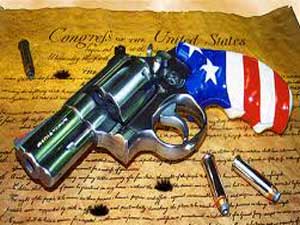 The Second Amendment to The United States Constitution was ratified on December 15, 1791, as a part of the United States Bill of Rights. The Second Amendment protects an individual’s right to possess and carry firearms and states “A well regulated Militia, being necessary to the security of a free State, the right of the people to keep and bear Arms, shall not be infringed.”
Two landmark decisions were made by The United States Supreme Court, establishing this interpretation of the Second Amendment. In the first case, District of Columbia v. Heller (2008), the Court ruled that the Second Amendment protects an individual’s right to possess a firearm, unconnected to service in a militia and to use that arm for traditionally lawful purposes, such as self-defense within the home. In the second case, McDonald v. Chicago (2010), the Court ruled that the Second Amendment limits state and local governments to the same extent that it limits the federal government.
In light of recent tragedies involving gun violence, gun control has moved to the forefront of debate. Some of the North Carolina firearms laws are outlined below and both the North Carolina and Federal laws as they are currently written are outlined in detail by the North Carolina Department of Justice
Requirements for the purchase of firearms in North Carolina:
-When a person desires to purchase a handgun from a federally- licensed dealer, the person needs to present a valid permit to purchase a handgun or valid North Carolina issued concealed carry permit.
-Under North Carolina law, it is unlawful for any person, firm, or corporation to sell, give away, transfer, purchase or receive at any place in the state, any pistol, unless the purchaser or receiver has first obtained a license or permit to receive such pistol by the Sheriff of the county where the purchaser or receiver resides, or the purchaser or receiver possesses a valid North Carolina concealed carry permit.§ 14-402(a)
Who Is Not Eligible for a Permit?
-Under North Carolina General Statute § 14-404, you are not eligible if one of more of the following apply:
(1) One who is under an indictment or information for or has been convicted in any state, or in any court of the United States, of a felony (other than an offense pertaining to antitrust violations, unfair trade practices, or restraints of trade). However, a person who has been convicted of a felony in a court of any state or in a court of the United States and (i) who is later pardoned, or (ii) whose firearms rights have been restored pursuant to G.S. 14-415.4, may obtain a permit, if the purchase or receipt of a pistol permitted in this Article does not violate a condition of the pardon or restoration of firearms rights.
(2) One who is a fugitive from justice.
(3) One who is an unlawful user of or addicted to marijuana or any depressant, stimulant, or narcotic drug (as defined in 21 U.S.C. § 802).
(4) One who has been adjudicated mentally incompetent or has been committed to any mental institution.
(5) One who is an alien illegally or unlawfully in the United States.
(6) One who has been discharged from the Armed Forces of the United States under dishonorable conditions.
(7) One who, having been a citizen of the United States, has renounced his or her citizenship.
(8) One who is subject to a court order that:
a. Was issued after a hearing of which the person received actual notice, and at which the person had an opportunity to participate;
b. Restrains the person from harassing, stalking, or threatening an intimate partner of the person or child of the intimate partner of the person, or engaging in other conduct that would place an intimate partner in reasonable fear of bodily injury to the partner or child; and
c. Includes a finding that the person represents a credible threat to the physical safety of the intimate partner or child; or by its terms explicitly prohibits the use, attempted use, or threatened use of physical force against the intimate partner or child that would reasonably be expected to cause bodily injury.
By Lauren Seidel, Paralegal
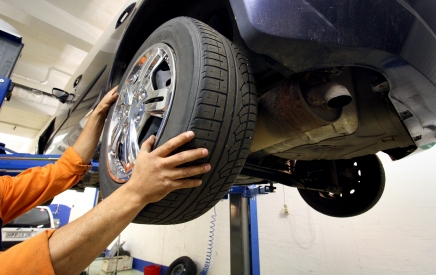 A visit to an auto repair shop can be intimidating. Especially when you need work done on your car and you aren’t sure what exactly needs to be done or how much it is going to cost. In order to avoid an unpleasant experience, it’s always a good idea to ask friends and family to refer you to a mechanic they have used and trust. Check to see that the mechanic is ASE (National Institute for Automotive Excellence) certified and that a sign is posted explaining your rights under the North Carolina law. Familiarizing yourself with the North Carolina Motor Vehicle Repair Act in advance may also help to avoid problems with a shop after work has been done on your car.
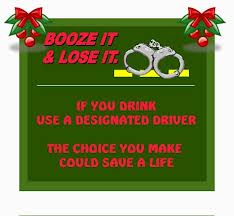 The holiday season is in full swing and so is the North Carolina “Booze It & Lose It” Campaign, created by State Transportation Secretary Gene Conti in an effort to remove impaired drivers from the road and keep our citizens safe. Checkpoints and increased patrol began on December 6th and will continue through January 2, 2013, to help reduce the rising number of alcohol related crashes, injuries and fatalities state wide.
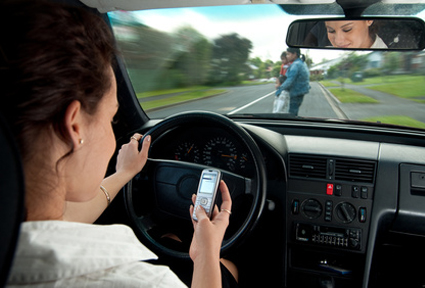 Over the past twenty years, cell phones have become an essential part of day to day life for many Americans. Cell phones continue to provide us with the convenience to communicate while on the go, comfort in knowing we have a way to call for help in case of an emergency, and access to music, games and entertainment. Cell phones can make life easier, but when used irresponsibly, can have disastrous consequences.
 The first Thanksgiving was celebrated in 1621 to commemorate a bountiful harvest in the Plymouth Colony. Americans have kept that tradition alive throughout the years, gathering with friends and family on the fourth Thursday of November to eat, drink, watch football, and of course, stay up all night to get the best deals on holiday shopping. While the meaning behind this holiday has remained the same over the years- to celebrate the things we have to be thankful for- the Colonists and Native Americans did not encounter two issues that Thanksgiving and the holiday season bring us today- an increase in traffic and an increase in drinking and driving.
 Traffic tickets can cause you a lot of headache. Not just can traffic tickets – if not handled properly – be very expensive, they can also cause you to loose your drivers license for up to 12 months without a preliminary hearing.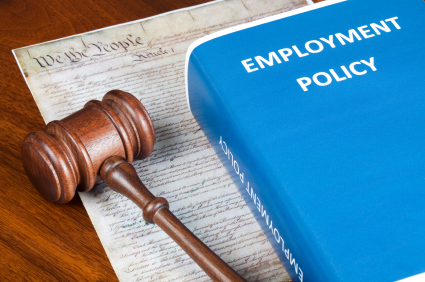
 On July 4, 2012, we will celebrate the 236th anniversary of the Declaration of Independence from the Kingdom of Great Britain. Many Americans consume alcohol during this celebration.